A euro cylinder lock is the most common type of lock for modern doors in the UK. It is recognisable by its distinctive shape. (For more information on the types of locks you may have, please refer to this my article on the types of household door locks). Although these locks are in wide use, there are a multitude of different manufacturers, standards and quality levels. Generally, these locks are robust and will last for years without any issues. Nevertheless, there are some common Euro cylinder problems that can occur. This article, written by Lock Guy, a professional locksmith based in Essex, aims to explain the main issues and suggest some likely causes and solutions.
Common Euro cylinder problems
1. Unable to Remove Key
Likely Cause – This is caused by a damaged key or a faulty lock where one of the key pins gets stuck in position.
Potential Solution / Tips – Try to apply some suitable lubricant if you can. Or try to press down on the core (the round bit that rotates with the key) and then pull. If not, a replacement lock will probably be needed.
2. Key not Turning
Likely Cause – This is caused by a damaged key, a faulty lock or a faulty gearbox locking mechanism.
Potential Solution / Tips – Try a different key. Try applying a suitable lubricant in the lock. Remove the lock to inspect it to diagnose the problem part.
Potential Solution / Tips – If the broken piece is not protruding, you will probably have to call a locksmith. If you can grab the broken end, then get some pliers on it and make sure the keyway is turned to the correct position.
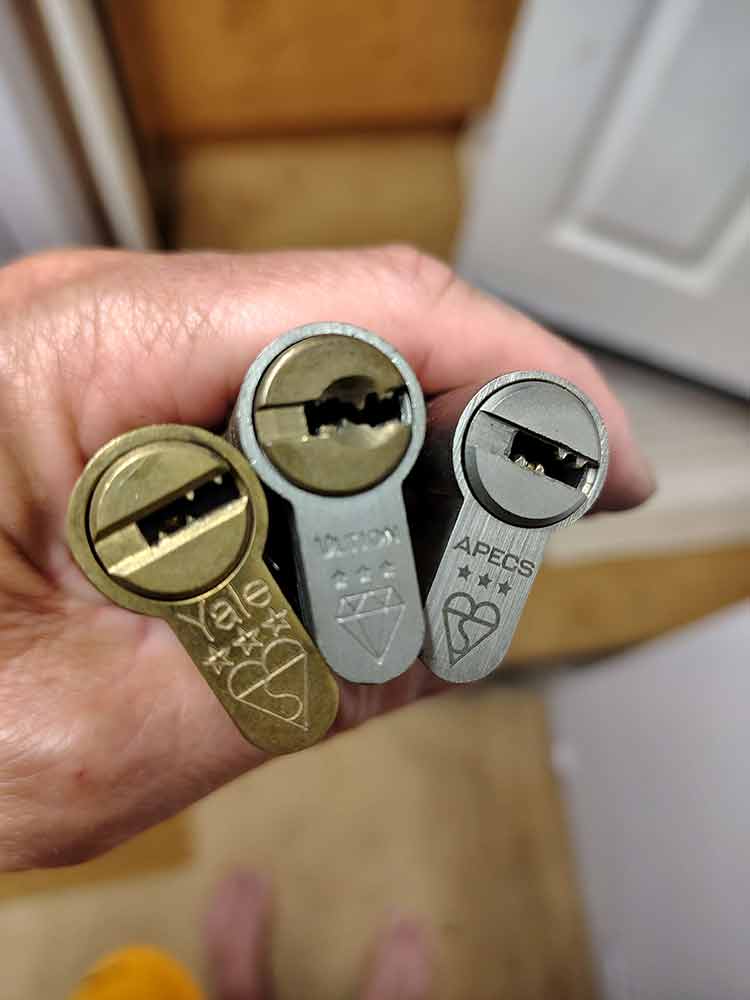
Euro Cylinder 3 Star locks
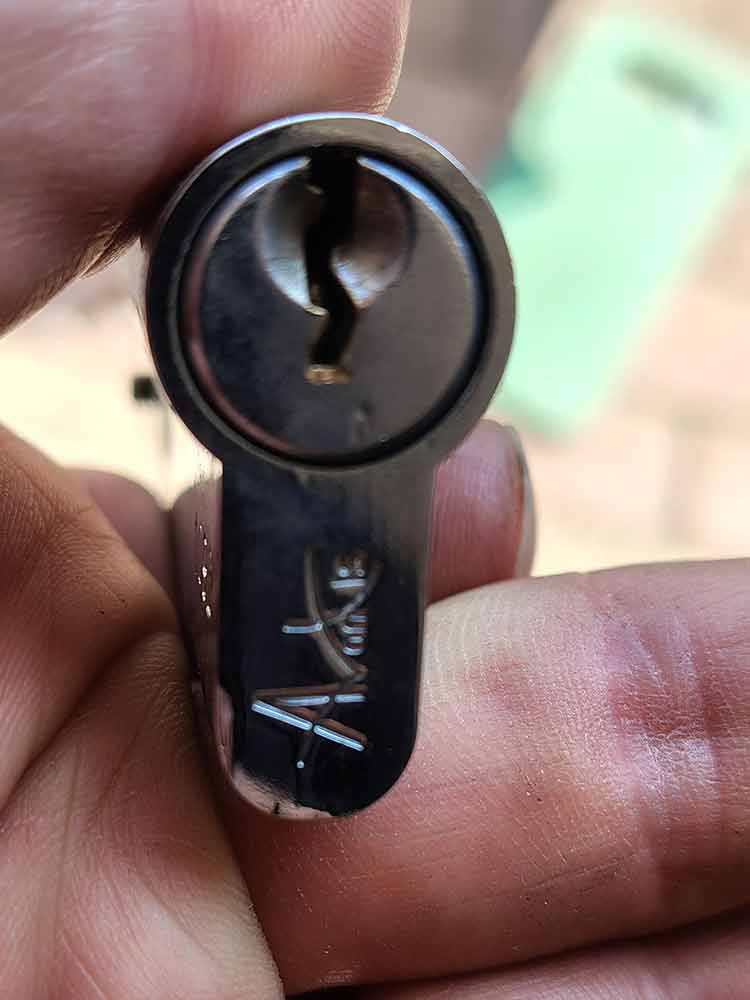
Euro cylinder profile
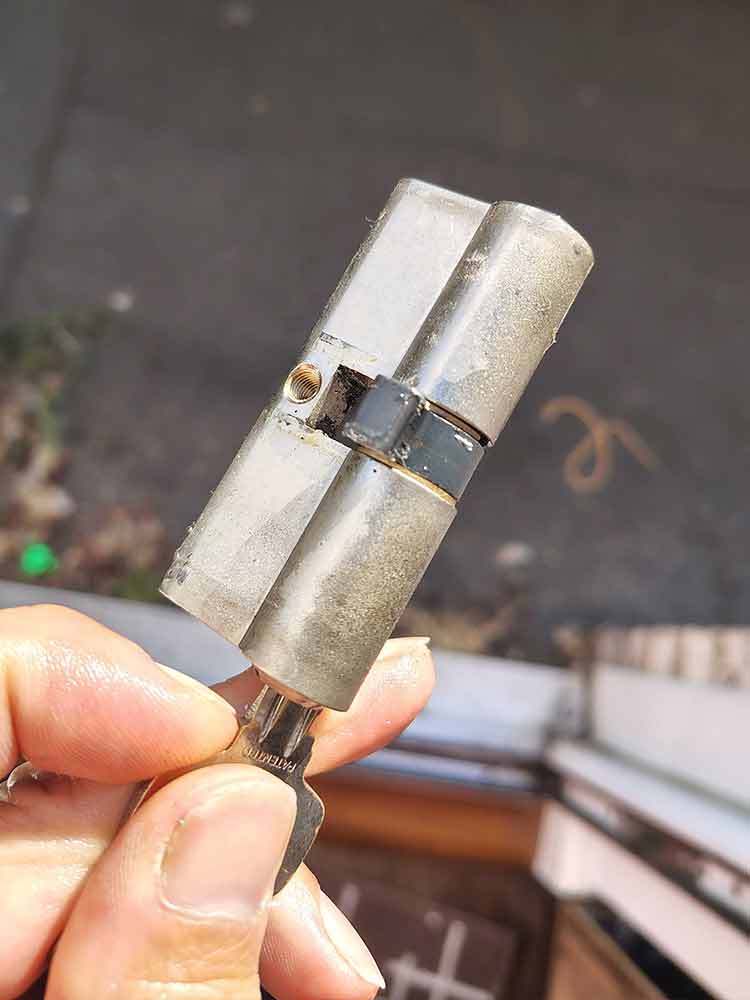
Removed euro cylinder lock showing cam
4. Cannot Remove Key When Door is Locked/Unlocked
Likely Cause – This is caused by what is known as a ‘slipped cam’. It means that the arm that operates the locking mechanism has got into the wrong position.
Potential Solution / Tips – The only real solution is to get the euro cylinder lock replaced.
5. Difficult to Insert/Retract Key
Likely Cause – Either a damaged key or there is some contamination in the keyhole.
Potential Solution / Tips – Try a different key. If not, apply appropriate lubricant.
6. Unable to Remove Euro Cylinder (you have the key)
Likely Cause – This is necessary if you want to change/check a lock. This is normally caused by either poor fitting or a damaged retaining screw.
Potential Solution / Tips – Try loosening or removing the handles first. Some locks can only be removed one way so try both directions. Some have a security shroud that needs to be removed first. If it is caused by a damaged screw, then try a broken screw extractor. Otherwise, you may have to call a locksmith.
7. Key Turns, but does not Lock/Unlock the Door
Likely Cause – This is either due to a faulty euro cylinder or a faulty gearbox locking mechanism.
Potential Solution / Tips – If possible remove and check euro cylinder in isolation of anything else. When testing it hold the cam while turning the key to see if the cam rotates freely. If so, you will need to call a locksmith to repair/replace the gearbox. One note: If you have a thumb turn on the inside, this can sometimes work itself loose. Tighten it and test again.
8. Protruding Cylinder
Likely Cause – Read my article on Protruding Euro Cylinder locks for a detailed explanation. It does not prevent the functioning of the lock – but it is a potential security issue.
Potential Solution / Tips – Replace the lock with the correct size.
9. Lock is Loose
Likely Cause – Untightened or missing retaining screw.
Often the cause of the issue could be one of many things. If you are able to remove the euro cylinder, then do so (there are many tutorials on YouTube about how to do this). If the cam (the black arm that sticks out) rotates freely when it is removed, then that is a likely sign that the euro cylinder lock is OK and the issue lies elsewhere.
In the end, you may need the services of a locksmith. If so, be careful with your selection. It is an unregulated market where rogue locksmiths operate and they will try to extort as much money as possible. Always use a trusted local professional locksmith. For any other information on this, contact Lock Guy