
If you are unable to lock and secure your door, then this is a potentially very bad situation to be in. Whether you are in the property knowing that someone else could just get in – or whether you are just on your way out and having to leave the property unsecure, either way, it is very concerning. This article will give you advice about what to do when you cannot lock your door and how to resolve the situation. It specifically relates to multi-point locking mechanisms typically found in uPVC and composite doors.
The best advice is to always call your local professional locksmith. If you have an issue with a door not locking in Essex, please contact Lock Guy.
However, if you are unable to afford a locksmith, or you feel confident enough to tackle the problem yourself, then this article should help.
In order to diagnose the problem, with the door in the open position, try to operate the lock. If the lock works fine, then you know that the issue is not related to a faulty lock or locking mechanism. In which case, the issue will be related to more of an alignment problem. If the lock does not work even with the door open, then you have to find the cause of the locking problem.

Once the problem is resolved, reassemble all the parts back into the door.
In the vast majority of these cases, the door will just need realigning. Over time and use, doors can ‘drop’ meaning that the side of the door with the lock in it is too low.
To check if your door has dropped, measure the distance from all the way along the top of the door to the top of the door frame. If it is a bigger distance on one side compared to the other, then it is a clear sign the door has dropped.
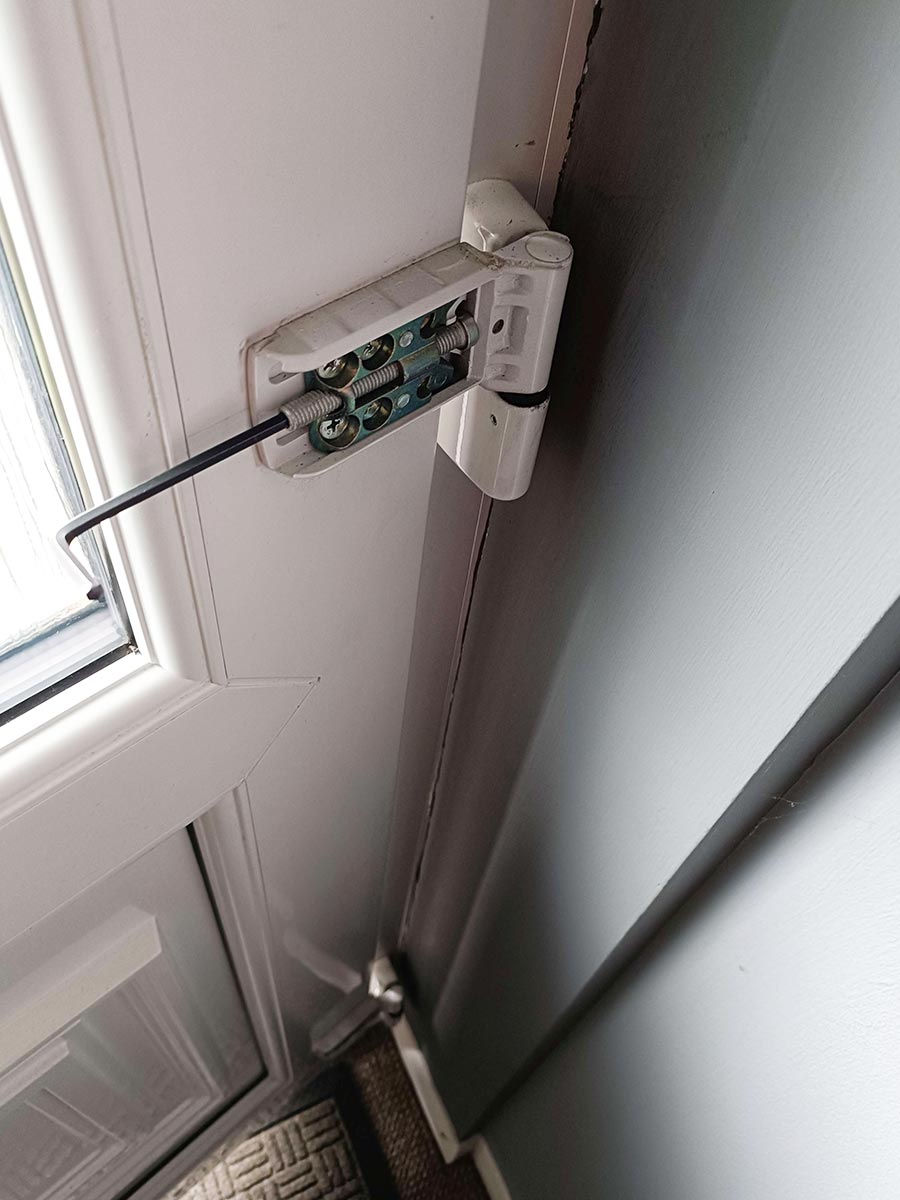
Most hinges on uPVC and composite doors can be adjusted (see image). There are too many hinge varieties to explain in this article how to adjust a door hinge.
YouTube has many videos of door hinges being adjusted, so this is a good place to look.
When adjusting the hinges make small changes and test the door after each adjustment.
Normally you will want to pull the top hinge in. Sometimes it helps to push the bottom hinge out to square up the door. It is often a trial and error approach so be patient. Mark with a pencil the original position of the door.
However, it is not always possible to adjust the hinges. In which case, the most common approach to resolving the issue is to adjust the keep plates (the parts fitted in the door frame that the locking points engage into).
If you visually inspect the keep plates, it is often possible to see signs of damage or wear where the locking points are clashing with the keep.
If you have a separate keep plate for each locking point, then try removing them one at a time and test the lock each time one is removed.
When the offending keep plate is removed the door should lock. Then that keep plate can be refitted in the correct position (try a few mm lower – you may need a drill to make a pilot hole for the screw).
If the keep plate is one long strip, then you may have to reposition the whole strip.
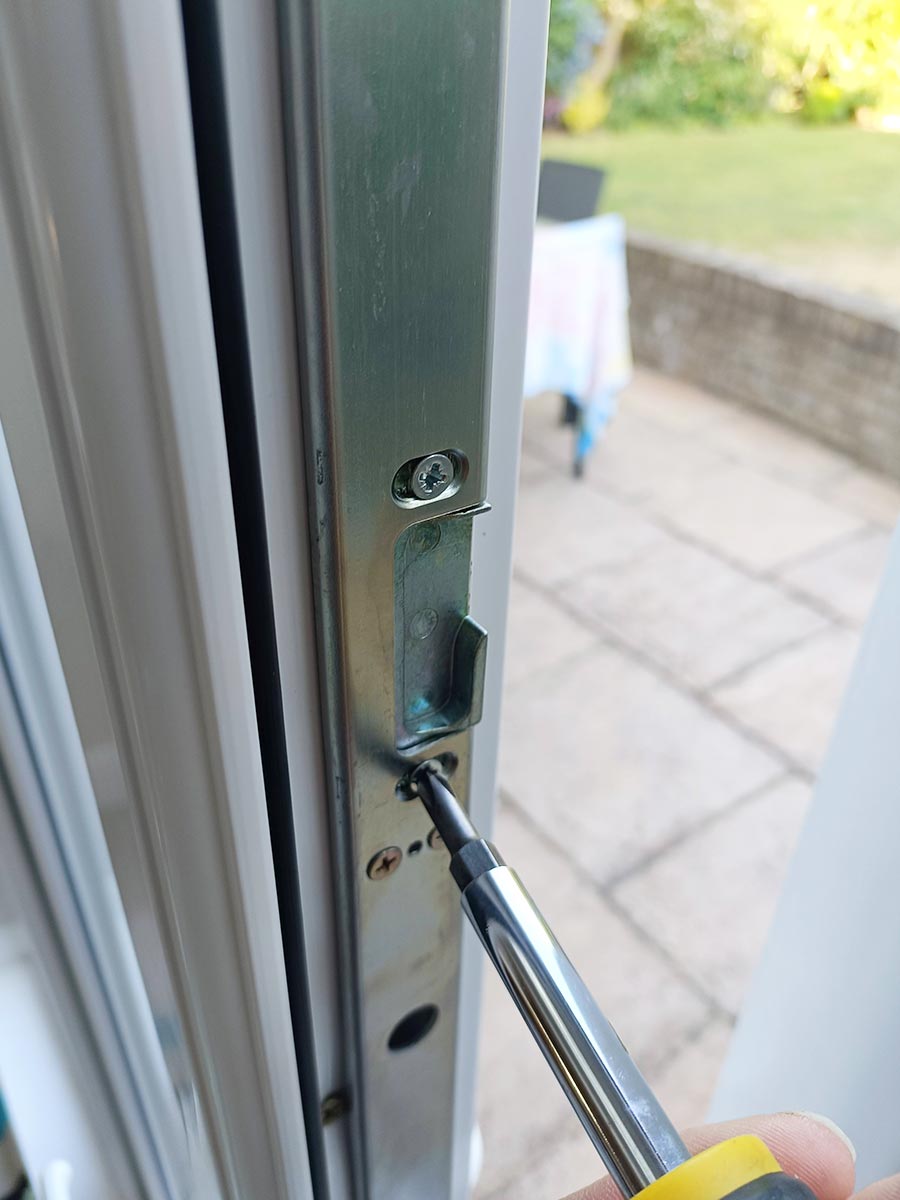
Sometimes there are adjustment points on the keep. Try to adjust these points to see if it has any effect. (The image below shows the screw points that will allow you to alter the position of the keep.)
If your door is fitted with shootbolts (the vertically operated locking points at the top and bottom of the door), then make sure that the hole at the bottom of the door frame is clear of any debris (e.g. stones) that may prevent the shootbolt from travelling its full distance.
Check that the weather strip at the bottom on the outside of the door (designed to prevent rain water ingress) has not moved and is hitting the door frame preventing the door from closing.
In the vast majority of times, a locking issue can be repaired/resolved. But in certain cases where there has been a lot of damage (e.g. after a forced entry) or if the building or door frame has become misaligned, it might need a complete new door.
Sometimes it is unavoidable when a problem occurs meaning that your door cannot be locked.
But checking your doors and maintaining your locks and lubricating them regularly can prevent problem from happening.
If your door is becoming difficult to close or if you are having to force the key or the handles, then these are all signs of a potential issue and you should get it looked at before you have an urgent issue when something fails.
Hopefully this article on What To Do When You Cannot Lock Your Door has been helpful if you’re experiencing issues when trying to lock your door.
If you need assistance from a professional, please feel free to give me a ring. And don’t forget, Lock Guy has a fully stocked van and only sources the highest quality locks from the best manufacturers if we do need to replace your lock.
If you have any questions related to this article, or you need a locksmith in Essex, then feel free to get in contact.
Got a question about a lock issue you may have? Why not have a look at the FAQ page or one of the helpful advice videos on the Media page.