
So you want to secure your most precious possessions and documents more safely in your home, but don’t know where to start? I’m often asked “What safe should I buy for my home?”. Nowadays there are a huge number of products and options available. So this article attempts to offer some guidance about how to go about selecting the right product with some tips, advice and things to consider.
A good starting point is to identify what you want to get protection from. Primarily from theft, or fire, or both?
Depending on your main concerns, that can influence the decision and the cost. For example, if you want to protect important documents in the event of a fire, then you can get a good fire proof rated safe for a relatively low cost. But be warned, the locking mechanism may be quite poor to keep out a would-be thief.
Next you should determine what size of safe you need. What do you want to store in there and how much volumetric space does it need? It’s always advisable to get one slightly bigger than you initially calculate to allow for future items that you may want to store in there.
Safes come in all sizes and the large ones can be extremely heavy. When considering size it’s important to make sure you check the internal dimensions and the outside dimensions. These can vary greatly due to the thickness of the walls of the safe.

Think about the method of opening you want. There are options for key entry, PIN code, dial, fingerprint or a combination of these.
If you opt for a key entry safe, then do not assume that just because it has a key that it is secure. There are different types of locks and different types of keys. The locks to be avoided are ‘cam’ locks that are operated by a flat key with teeth that, when inserted, align a series of ‘wafers’. These types of locks are relatively easy to pick open.
So it is better to have one with a mortice style key (long metal rod with a bit at the end) that uses a series of internal levers to operate the mechanism.
It may be important to you what insurance rating a safe has. If you have very expensive possessions that are insured individually, the insurance company will normally want to know the rating of the safe. A good safe can bring down the cost of your insurance premium. The insurance rating is determined by factors such as thickness, strength, build quality, quality of locks/security and how difficult it is to physically move the safe.
Some free-standing safes can be manipulated and opened without any tools (there are videos widely accessible on YouTube about how to do this).
Additionally it’s important to think about the installation. A light free-standing one can be easily stolen/manipulated. You should always attempt to secure the safe to the wall/floor using fixings that you can only get to from inside the safe. If not possible, try to find the best hiding place you can.
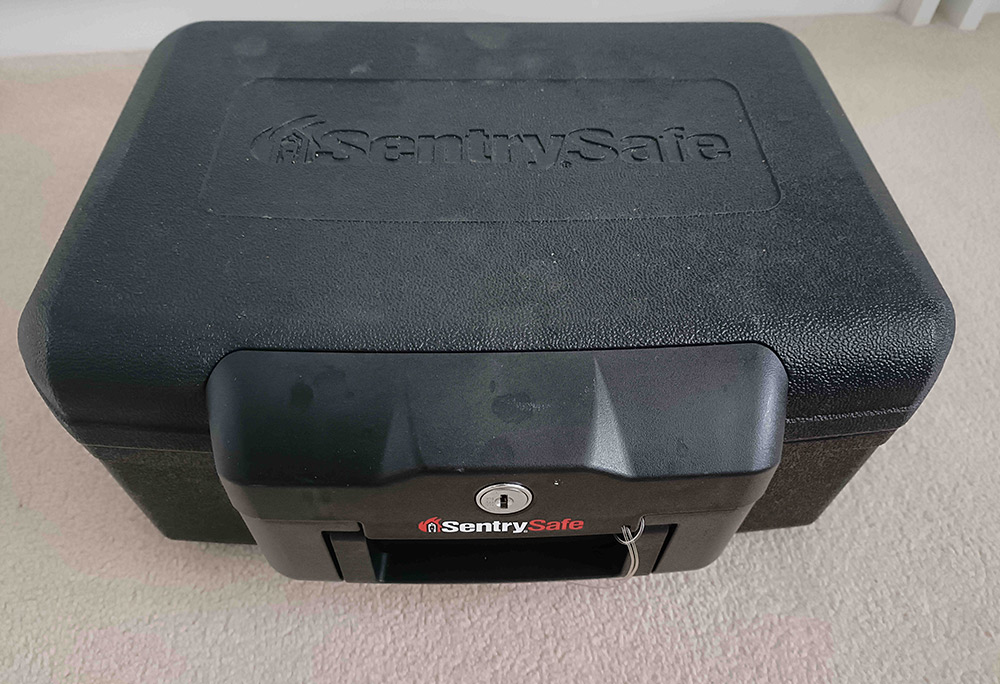
The ability for your safe to endure fire may be an important consideration for you.
The fire rating of a safe is measured in minutes. 30 minutes is considered as an acceptable entry level fire rated safe (do not go for anything lower than this). 60 minutes is classified as ‘Medium’ resistance, whereas 90 minutes is considered as ‘High’ resistance.
Anything 120 minutes or more is really the maximum rating and normally comes with a price tag to match.
In conclusion, you generally get what you pay for when it comes to choosing a safe. A cheap online safe for around £50 or less is probably not going to give you the protection you want.
Think about the value and the importance of the items that will be put into your safe and the safe value should match the value of the items that will be kept in it. You wouldn’t put jewels worth millions in a £50 safe from eBay!
I hope this article on “What Safe Should I Buy For My Home?” has been useful to you. If you have any questions or would like to discuss my services please get in contact.
Got a question about a lock issue you may have? Why not have a look at the FAQ page or one of the helpful advice videos on the Media page.