Should you Choose a Lock with a Thumb Turn or Without?
Euro cylinder profile locks are the most common type of door lock in the UK and are normally found on uPVC and composite doors. These locks work in conjunction with some kind of locking mechanism fitted in the door. These can be a key-key lock or a thumb turn lock.
When selecting a euro cylinder lock, there is a huge variety of different manufacturers, different standards and different quality levels. Regardless of this, at some point you will have to consider the option of having a thumb turn lock on the inside, or not. A thumb turn is a knob that operates the lock manually with your hand without the need of a key. The thumb turn is on the inside of the door whilst the external side is operated with a key in the normal way.
There is not really much of a cost difference between a cylinder with a thumb turn or a standard lock (known as a euro double or a key & key). So this article looks at providing the necessary advice when answering the questions about whether you should select a thumb turn lock, or not.
Practical Considerations
In terms of convenience, having a thumb turn lock is definitely advantageous. If your door is properly locked and you need to open the door quickly (e.g. you have a visitor or a delivery driver) then you do not need to go searching for the key if you have a thumb turn. You just walk up to the door and unlock it by turning the knob with your fingers.
Another advantage for a thumb turn lock is that some elderly people or those with mobility/dexterity issues prefer operating a thumb turn because it is easier than having to insert a key that can be challenging or some people.
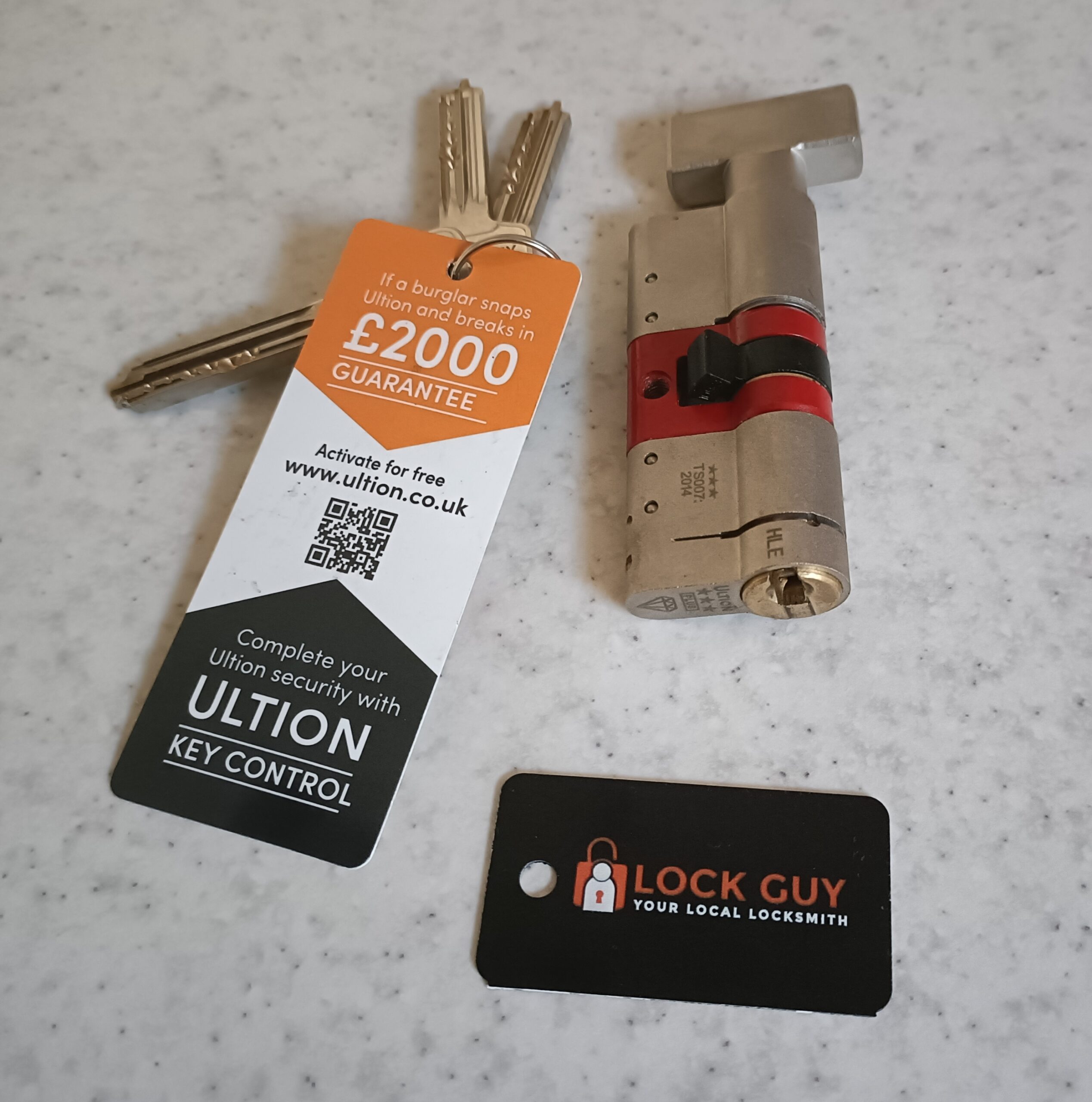
A selection of thumb turn locks
Thumb turn lock removed from a door
Also a consideration should be that it is not so easy to get locked out of your home with a thumb turn lock.
The reason is that one of the most common ways of getting locked out is by leaving a key inserted into the lock on the inside and then closing the door behind you. Once this happens, the keyway on the outside is disabled and you cannot re-enter your property.
With a thumb turn, there is no chance of leaving a key inserted on the inside because there is physically nowhere to insert a key on the inside.
Security Considerations
Depending on your set-up, it could be argued that having a thumb turn lock is not as secure. If an intruder can access the thumb turn then it is possible for them to easily unlock it and gain entry. There are some methods that burglars may use that involve going through a letterbox to manipulate the thumb turn. So generally it is not advisable to have a thumb turn if you have a letterbox that is relatively close to the thumb turn.
Often modern high security doors do not have a letterbox at all in which case an external mailbox needs to be fitted. Then, in this situation, having a thumb turn lock is no problem at all.
Or, if the lock is located near a window that could be broken relatively easily, then the burglar could smash that window and just reach inside to unlock the door.
The locks you install should make it as difficult as possible for a burglar. If you have a secure lock, then a burglar may find it too hard to break-in through a door. In which case a burglar may force entry through a window for example. By having a thumb turn, it is then easy for the burglar to exit the property quickly (as they do not need a key) and easy to carry out whatever they want through the door. Anything that makes a burglar’s life more difficult is good, so it could be argued that a thumb turn makes their life easier.
Legal Considerations
The choice of whether to have a thumb turn lock is generally down to the homeowner to decide. However, there are some exceptions.
If you live in a block of flats or an HMO (House of Multiple Occupancy), then according to fire regulations, you must have a thumb turn lock. This is so, in the event of a fire, the occupants can make a quick exit without needing to find a key. For more details, read my article on fire regulations and thumb turn locks.
In Summary
Generally, to answer if you should have a lock with a thumb turn fitted comes down to the preference of an occupant and that normally comes down to a decision of convenience vs. security.
As a professional locksmith, Lock Guy generally always recommends not to have a thumb turn lock as security is paramount.
However, this advice is of course completely dependent upon individual circumstances.
If you have any further questions or need any advice on this subject in Witham, Maldon or across Essex, then contact Lock Guy