
Many locksmiths and lock manufacturers talk about the virtues of having anti snap locks. But what exactly are these locks and, more importantly, does it really matter and are they worth it?
This article, written by Lock Guy, a professional locksmith based in Essex, discusses all these points and will explain all you need to know about anti-snap locks.
When referring to anti-snap locks, we are talking about a type of euro cylinder lock (for more information on the types of locks in your home, read this article on types of door locks).
A euro cylinder lock is the most common type of household door lock in the UK. The anti-snap locks have additional security features to prevent a particular forced type of entry that burglars use.


In order to not explain exactly what this method is (as this article is not a tutorial for potential criminals) it will be intentionally vague. This method forces the lock to break in the middle thereby allowing access to the locking mechanism fitted in the door. Standard euro cylinders have a weakness in the design and lock snapping takes advantage of this weakness meaning that forced access can be achieved very quickly with only basic tools.
There are two main features that prevent lock-snapping. Firstly, snapping can be prevented by reinforcing the central part of the lock with a hardened metal body making it significantly more difficult to break. The other feature that is used is some kind of ‘lockdown’ feature that allows only the front section of the lock to snap (not the middle part) and a firing pin is engaged to keep the lock locked in place.
Some locks do have a sacrificial cut to allow only the front section to break off without allowing access to the locking mechanism – but without a lockdown feature and/or a hardened central body, these types of locks should not be considered as anti-snap.
There is a large variety of euro cylinder lock manufacturers and models with differing security levels and quality levels that can vary greatly. In the UK there are 3 broad categories:
1. Standard: If they are not made to a BS standard, then the likelihood is that they will not be anti-snap (although the only way to check is by physically looking – if you know what to look for).
2. British Standard 1 star: Whilst some 1-star locks do have anti-snap features, this BS standard does not actually test for snapping – so these locks may not be anti-snap.
3. British Standard 3 star: These locks are tested to the highest level and will definitely be anti-snap. (See image).
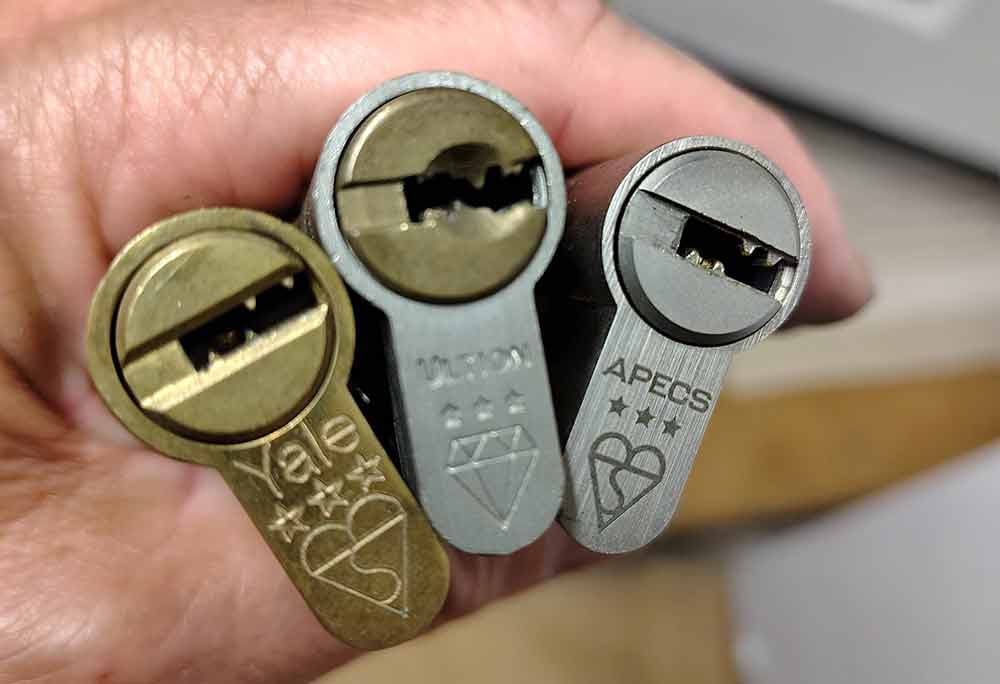
To avoid becoming a target for lock snapping, it is important that the euro cylinder lock is fitted correctly. The basic principle is that it should not protrude beyond 2-3mm from the face of the handle. If it protrudes beyond this, then the would-be burglar might see it as an easy target as they can grab hold of the end and force it to snap.
Although, even if it protrudes out, a good 3-star anti-snap lock will still prevent access.
Even if the euro cylinder is fitted correctly, it does not mean you are safe as burglars will attempt to break off the handles to expose the lock and then it can be attacked (snapped). High security handles will prevent this from happening.
It is possible to purchase British Standard 2-star handles and if these are used in conjunction with a 1-star non-anti-snap lock, it is still considered safe and secure from lock snapping.
If you have a 3-star euro cylinder lock, then you do not in theory need high security handles.
Anti snap locks are of course more expensive than standard euro cylinders, however, if you are serious about home security and you want to do everything possible to protect your home, then it is definitely worth investing a little extra and getting anti-snap locks.
If you are not sure if your locks are anti-snap, then contact your local professional locksmith. Most reputable locksmiths will gladly assess your locks and normally do not charge local customers. If you require any further information, or you need a locksmith in Chelmsford, Colchester, Maldon, Witham, Braintree and all surrounding areas, then contact Lock Guy.
Got a question about a lock issue you may have? Why not have a look at the FAQ page or one of the helpful advice videos on the Media page.