Multi-point locking mechanisms are fitted to the edge of uPVC and composite doors and when activated they engage several locking points into the door frame. (Please read this previous article on multi-point locking mechanisms if you are interested in more info on them). They are very common in the UK and offer very good security. However, problems can arise with these locking mechanisms. In this article, written by Lock Guy, a professional locksmith based in Essex, some of the more common multi-point locking mechanism problems are discussed along with potential solutions.
Common Multi-Point Locking Mechanism Problems
There are many issues that could occur that can cause difficulties and/or prevent you from operating the multipoint locking mechanism in your door. These include:
Unable to lift handles fully
Unable to depress handles
Unable to turn key fully
Door does not close properly
Difficult/Stiff to operate
Cannot unlock/open door
Steps to Take to Resolve Issues
Firstly, please note that, whatever the issue, a good reputable professional locksmith will be able to help resolve the issue you have. Tackling a problem yourself can make the problem worse and leave you with a bigger issue, e.g. unable to secure and use your door and leave you needing to call an emergency locksmith. Nevertheless, if you feel confident to tackle the problem yourself, then the following steps should help.
1. Lubricate
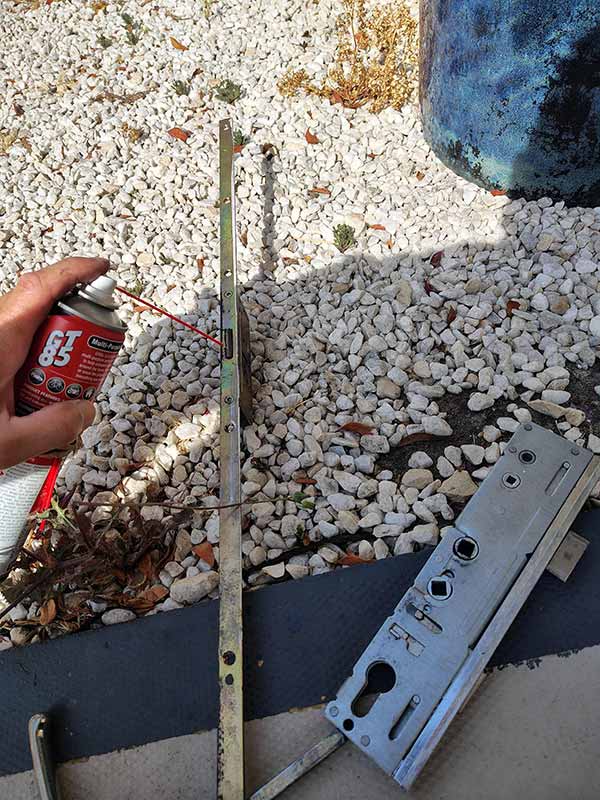
Firstly, it is always a good idea to start with lubricating the locking mechanism. Assuming you can still open your door, then get a good quality lubricant (silicone or PTFE based is best) and spray liberally on any part that moves (or should move). Allow a little time for it to run into all affected areas and then test again. Sometimes it is necessary to remove the locking mechanism to be able to properly get to the all the areas that need lubricating. Lubrication can often solve issues with the locking mechanism as they operate on a series of cogs, levers and springs that can run dry if not properly maintained.
2. Check lock
If the issue relates to not being able to turn the key properly then it might be related to the lock cylinder (also known as the lock barrel). If the door is open, then you can can take out the lock by removing one screw (there are tutorials on YouTube for this). Once removed, insert the key and ensure that the central arm (the ‘cam’) rotates freely in both directions. If it does, then you know that the lock is OK. If it does not rotate properly, then you will probably need to replace the lock.
3. Check alignment
One of the most common reasons for issues with multi-point locking mechanisms is that the locking points no longer match up closely enough with the connecting points in the door frame (the keeps) that the locking points engage with. To check if this is the problem, try operating the mechanism when the door is in the open position. If it works fine when open, but not when it is closed, then you know it is an alignment problem. This issue can normally be resolved by either adjusting the hinges, repositioning the keeps in the frame or by a process called ‘toe & heeling’ (which invloves de-glazing the door and repositioning the glass).
Lubricating the hook unit on a multi-point locking mechanism
4. Check for damage
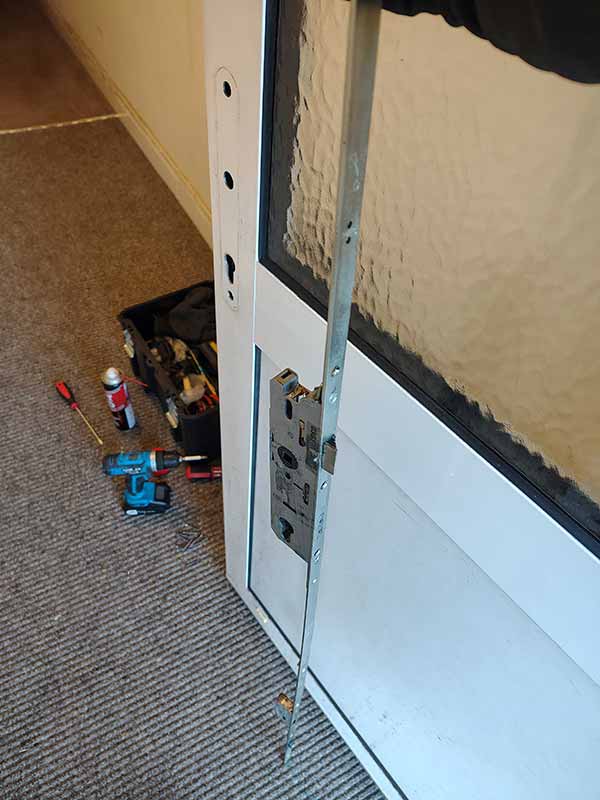
If the above steps have not resolved the issue, then the full locking mechanism needs to be removed from the door. Start by removing the lock and handles along with spindle(s). Then take out the screws that secure it to the door by removing them from the faceplate. Do not remove the smaller machine screws that hold the mechanism together. The full mechanism should now come loose, although sometimes they can be stiff to take out. Visually check for signs of damage. Look for fragments of metal that may have broken off. Essentially, if you see something has broken – then that part should be sourced and replaced. A locksmith will probably carry the part you need.
5. Isolate Problem
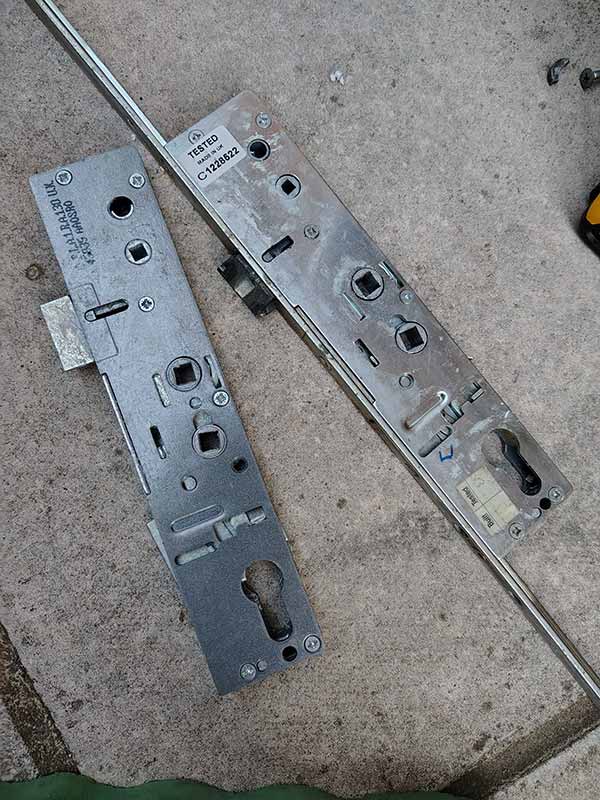
If there is no obvious damage, then it is a case of testing each part in isolation. Start with the central gearbox by removing it from the full strip. Check the operation by inserting the spindle and handle and trying to operate. If OK, then move on to the next module that you can remove. If it is a hook unit, then sometimes by simply removing the problem part can solve the issue on a temporary basis. Once the problem part is identified, then it will need to be replaced. Some mechanisms come as one complete unit and, in this case, you may have to replace the whole mechanism.
Example of damaged broken gearbox unit
Locking mechanism removed from door
Lock removed from locking mechanism
Replacing the gearbox
Please note that these steps are just general guidance advice to follow. There are so many different types of locking mechanism, it is not possible to give detailed guidance on every type.
If the door is stuck in the locked and closed position and the door cannot be opened, then you should not tackle this unless you have a lot of experience in this kind of situation. In this scenario call a good, local, reputable professional locksmith.
Help is at hand
If you want any further information on common multi-point locking mechanism problems, or you have an issue with a multi-point locking mechanism in Essex, then contact Lock Guy